Measure
We use benchmarks, datasets, and human-subject studies to measure how AI changes deception and manipulation, and whether defenses work.
About
Menlo Park Intelligence was founded in 2025 to study how AI reshapes trust, information integrity, and cognitive security. Our aim is to help secure the new technical landscape that is increasingly operated by AI agents, and ensure this digital transition fosters public-benefit technology that serves human prosperity and democratic stability.
The coming years will require drastic changes to cybersecurity, defense technology, and personal technology usage habits. The internet and broader technology ecosystem are changing to an environment where AI agents handle every action and decision. As people increasingly rely on agents to act for them, graphical interfaces and human intervention disappear, and technology and the web will become a black box that agents navigate on our behalf. In this world, agentic social engineering will be the dominant digital threat, and defending against it will become critical.
Our research protects against these threats by turning emerging, poorly understood risks into evidence that defenders can act on. Our kill chains break AI-enabled attacks on people, institutions, and AI agents into their operational stages. They cover deception, manipulation, cyberattacks, and influence operations aimed at everything from personal AI assistants to elections and democratic processes. Our quantitative bottleneck and AI uplift scores then show where intervention will have the greatest effect. This allows us to create benchmarks, defense recommendations, and solutions in the area that intercept attackers where it generates the most benefit.
We use benchmarks, datasets, and human-subject studies to measure how AI changes deception and manipulation, and whether defenses work.
We develop tools and methods to help people recognize deception and resist manipulation, grounded in how people judge credibility and respond to attacks.
We work with policymakers, frontier AI labs, and technology companies to translate research into evaluations, safeguards, and policy that protect human agency.

Executive Director
Fred Heiding is the Executive Director of Menlo Park Intelligence and a Fellow at UC Berkeley’s Center for Long-Term Cybersecurity. He was previously a researcher at the Harvard School of Engineering and Applied Sciences and the Harvard Kennedy School, working with Eric Rosenbach. His work bridges computer science and political science to explore how emerging technologies shape international conflict, with a particular interest in AI-enabled manipulation and social engineering. Fred is a member of the World Economic Forum's Centre for Cybersecurity and the Geneva Centre for Security Policy, and served on the committee of the Harvard and MIT Technology and National Security Conference. He has taught several AI and cybersecurity classes at Harvard, regularly briefs the U.S. Congress, federal agencies, and international governments on AI-powered cyber threats. His work has been featured in leading outlets, including The Economist, Reuters, TIME, Foreign Affairs, Black Hat, and DEF CON. Fred has assisted in the discovery of more than 45 critical computer vulnerabilities (CVEs), and he previously made headlines for hacking the King of Sweden and a European Commissioner.
Publications
Fellow
Mitchell is an experienced fundraising data analyst and grant writer covering a broad range of nonprofit industries including healthcare and higher education over the last decade. Recently, he transitioned careers into government healthcare policy in addition to contributing to AI policy at Menlo Park Intelligence.
Mitchell holds a Master of Public Policy and Management from the University of Pittsburgh, where his chosen research subjects included AI policy and dual-use research of concern. He also holds a Master of Business Administration with a concentration in Business Analytics and a Bachelor of Science in Management. Additionally, Mitchell has completed coursework at BlueDot Impact.
Specializations: AI policy, Government relations, Grants and funding
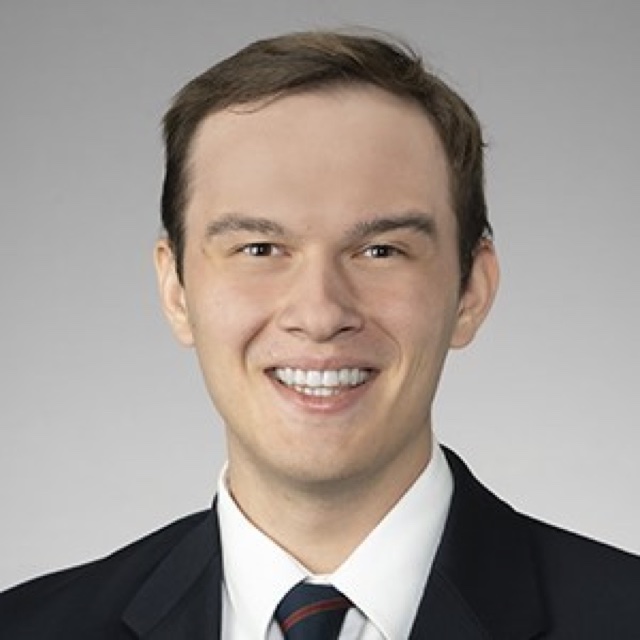
Research Engineer
Erik is a research engineer working at the intersection of fraud and responsible AI. He currently works on researching the technical infrastructure used to enable online fraud and the ways AI provides uplift for threat actors. Previously, he worked as a developer across software engineering, cloud infrastructure, and network security teams.
Erik initially began working with MPI as a fellow through the CBAI Fellowship in Cambridge, MA. He has also conducted research in AI safety focused on detecting manipulation in language models through the SPAR program. He holds an MS in Computer Science from Georgia Tech and undergraduate degrees in Computer Science and Mathematics/Economics from the University of Pittsburgh.
Research domains: fraud & scams, cybercrime ecosystems, AI safety, deception detection, and AI evaluations.

Fellow
Michael is a practitioner & researcher with almost a decade of experience investigating emerging threats, criminal ecosystems, & various forms of online abuse at scale. He currently leads the emerging threats group at eBay, with prior stints disrupting bad actors at Stripe and Amazon Web Services.
He holds prior fellowships from Paragon/SPAR and has been a routine contributor, writer, & speaker at the Trust & Safety Professional Association & the Integrity Institute. Michael holds an BA from Whitworth College and a MS from the University of Illinois Urbana-Champaign, and sits on the board of advisors at CLARA, a nonprofit benchmarking group for child safety online.
Research domains: fraud, identity based risks, misinformation, Asia-Pacific organized cybercrime